Jon Harris
Real Police Patrol
Lessons from the street
A tire iron swung in darkness. A domestic call that turned on the officers. A traffic stop where patience saved lives—and another where it ran out. Drawing on decades of experience in urban patrol, Jon T. Harris delivers unvarnished insights from the frontline of policing.
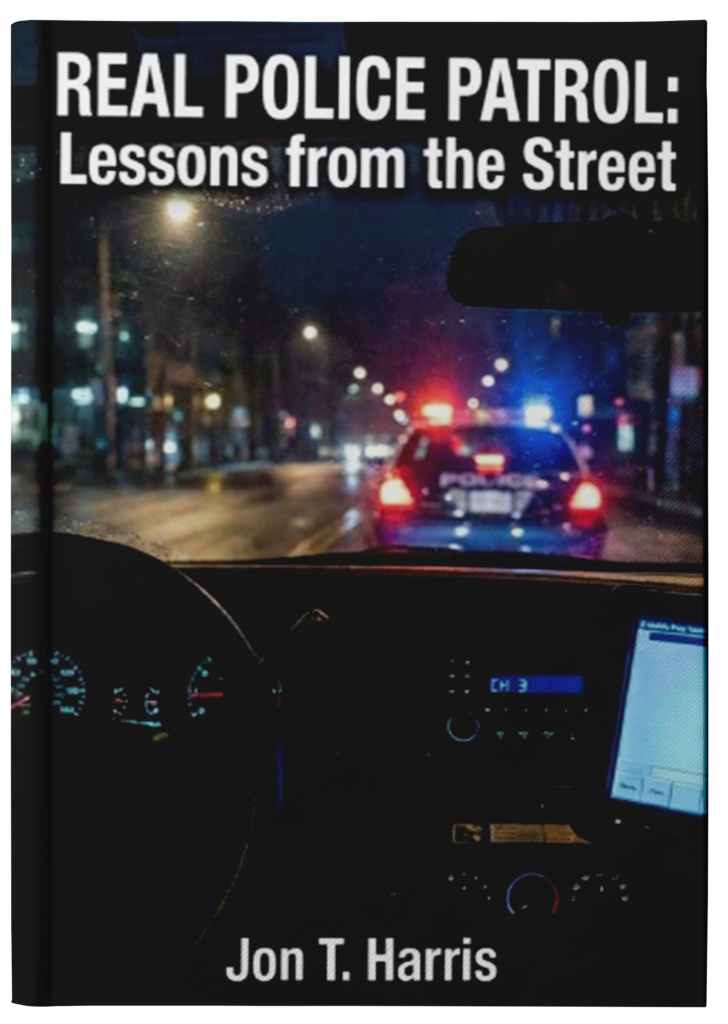
About the Book
Real Police Patrol
Lessons from the street
A tire iron swung in darkness. A domestic call that turned on the officers. A traffic stop where patience saved lives—and another where it ran out. Drawing on decades of experience in urban patrol, Jon T. Harris delivers unvarnished insights from the frontline of policing. Real Police Patrol is not a tactical manual, but a collection of raw, firsthand accounts that expose the complex, unpredictable, and often dangerous reality of modern law enforcement. Each story offers practical lessons for officers, and a stark perspective for anyone seeking to understand what it truly means to wear the badge. This is policing without the filter.
Jon T Harris
video Trailers
Articles & News Of Real Police Patrol
Lessons from the street
Read Our Latest Blogs and Articles
The Most Dangerous Mistake New Officers Make
When new officers hit the street, they usually worry about the wrong things. They worry about not knowing the law well enough. They worry about
The Role of Backup in Law Enforcement Safety
There is a moment on many calls where everything can change. It might look simple at first. A domestic disturbance. A loud argument. A suspicious
Two Officers, One Decision, and a Very Long Night
There are calls in this job that do not stand out at first. They come in like any other. A disturbance, an argument, something that
Book Reviews
What readers say about the book
I picked this book up expecting a few action-packed police stories, but what I got was something much more thoughtful. Jon Harris doesn’t glamorize the job. Instead, he walks the reader through the split-second decisions officers have to make and the consequences those choices carry. What stayed with me most was the honesty. Harris openly talks about mistakes, fear, and the lessons learned over decades on the street. It gave me a new perspective on the pressures officers face that most civilians never see.
This book reads like you’re sitting in the passenger seat of a patrol car. The incidents feel authentic, and the author’s experience shows in every chapter. What impressed me was how the stories always led to a practical lesson about judgment, patience, or situational awareness. I also liked that the author takes time to explain why officers do certain things that might seem strange to civilians, like asking someone to step out of a car or waiting for backup. It made the realities of police work much clearer.
As someone who has never been involved in law enforcement, I found this book incredibly eye-opening. The way Jon Harris describes domestic calls and routine stops turning into dangerous situations really changed my understanding of police work. The writing is straightforward but powerful, and the stories carry emotional weight. You can tell the author isn’t trying to impress anyone. He’s simply sharing what the job actually looks like and what it teaches you about people.
This is one of the most grounded books about policing I’ve read. Harris doesn’t try to portray officers as heroes or villains. Instead, he presents them as human beings making difficult decisions with limited information. The chapters about waiting for backup and reading a situation before acting were especially memorable. It’s a reminder that sometimes the smartest move in a tense situation is patience.
Jon Harris has a gift for explaining complex situations in a way that makes sense to everyday readers. Even when the stories involve tense encounters, the writing stays calm and thoughtful. The lesson about discretion in policing really stuck with me. The author shows that not every situation requires an arrest, and sometimes the best outcome is simply preventing things from getting worse.
This book gave me a new appreciation for how complicated police work can be. The stories are engaging, but what really matters are the insights behind them. I especially liked how the author explains the mindset officers develop over the years of experience. It’s not just about enforcing laws. It’s about reading people, managing conflict, and making judgment calls under pressure.
What I enjoyed most about this book is how practical it feels. The lessons don’t just apply to law enforcement. Many of them apply to everyday life, like staying calm in stressful situations or thinking before reacting. The author’s decades of experience really come through, and it’s clear he’s spent a lot of time reflecting on the job and what it taught him.
This book offers a rare look at the thinking process behind police work. Instead of focusing on drama, the author highlights the importance of patience, communication, and awareness. By the end, you realize the biggest takeaway isn’t the stories themselves but the lessons about judgment and responsibility.
This book offers a rare look at the thinking process behind police work. Instead of focusing on drama, the author highlights the importance of patience, communication, and awareness. By the end, you realize the biggest takeaway isn’t the stories themselves but the lessons about judgment and responsibility.