

Action Adventure Thriller Series With Real Stakes

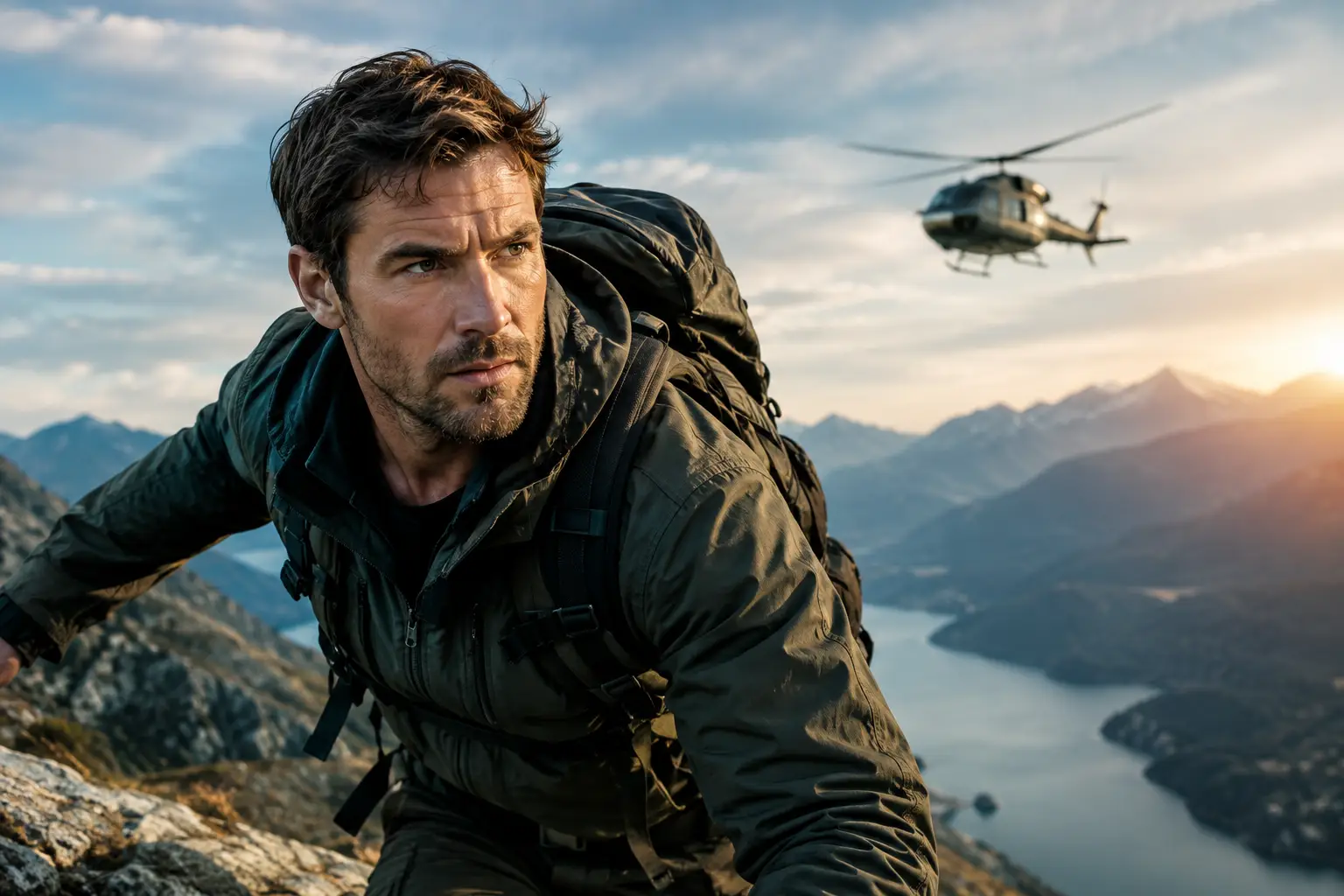
A rifle report in the dark is easy to write. The harder work is showing what comes after: the bad call that cannot be taken back, the teammate who does not make it home, the investigator who has to explain a split-second decision to people who were not there. That is where an action adventure thriller series earns a reader’s trust.
Readers can find explosions, conspiracies, and global threats almost anywhere. What keeps them turning pages through a second, fifth, or tenth book is something more demanding: a capable protagonist, credible pressure, and consequences that do not disappear when the operation ends.
What Makes an Action Adventure Thriller Series Last
The strongest series builds momentum without treating every book like a louder version of the last one. The threat may grow larger, but the story has to grow deeper. A protagonist who survives gunfights but never changes is only a vehicle for set pieces. A protagonist who carries the weight of command, failure, loyalty, and loss can hold a long-running series together.
That does not mean every thriller needs to become quiet or introspective. Action matters. Readers come for the pursuit, the surveillance, the close call at a border crossing, the raid that goes sideways, and the moment a plan meets real resistance. But action has more force when it is tied to a human objective. Protecting a witness means more when the witness has become real on the page. A rescue carries more weight when the team knows exactly what failure will cost.
Credibility is part of the bargain. Readers with military, law enforcement, emergency service, legal, or security experience can spot empty posturing from a long way off. They do not require a manual disguised as a novel. In fact, too much technical detail can kill urgency. They want the details that matter: how professionals assess a room, communicate under stress, manage uncertainty, and live with imperfect information.
Authenticity also means admitting that competence has limits. The best operators get tired. Good investigators follow leads that go nowhere. A prosecutor may have the truth and still face a weak case. A working dog can find what a person misses, but it cannot remove the handler’s responsibility. Real stakes are not created by making the hero invincible. They are created by putting a capable person in a situation where skill may not be enough.
The Difference Between Noise and Suspense
A lot of books have action. Fewer have suspense.
Noise is a car chase added because the chapter needs energy. Suspense begins earlier. It starts when the reader understands the mission, sees the limitation, and recognizes the danger before the first shot is fired. Maybe the team has limited time. Maybe the intelligence is compromised. Maybe the person giving the order has an agenda that does not survive scrutiny.
That is why a strong action-adventure story needs restraint alongside speed. If every chapter ends in a blast, a betrayal, or a miraculous escape, readers become numb. Pressure needs variation. A careful interview can be more tense than a firefight when a single wrong question could burn a source. A courtroom hearing can carry as much danger as a raid when the result determines whether a violent offender walks free.
The best series understands the value of recovery scenes, too. After the mission, characters need room to assess what happened. Not every consequence requires a speech. Sometimes it is a phone call not made, a marriage strained by silence, a veteran avoiding sleep, or a detective staring at a case file long after everyone else has gone home. Those moments make the next deployment, pursuit, or confrontation matter.
Why the Team Matters as Much as the Hero
A lone hero has appeal, but a series gets stronger when the world around that hero has weight. Teams create friction, loyalty, blind spots, and accountability. They also keep a protagonist honest.
The trusted partner may recognize when the lead character is pushing too hard. The rookie may challenge an old assumption. The intelligence analyst may see a pattern that the field operator misses. A K9 handler may understand that the dog is reading tension before anyone in the room admits it. None of these characters should exist merely to provide exposition or become a casualty on schedule. Give them skills, history, and something at risk.
That is especially true in military and police fiction. Service is built on relationships. People carry each other through difficult work, sometimes literally. A series that honors that bond without turning it sentimental has more staying power than one built around a single unstoppable man with a gun.
There is a trade-off. A large supporting cast can slow a book if every character gets equal attention. The answer is not to make everyone interchangeable. Keep the circle focused, then let each person affect the central problem in a meaningful way. Readers remember the teammate who made a hard call for the right reason, even if they disagreed with it.
Consequences Are the Series Engine
A series does not need to trap its protagonist in endless misery to feel serious. But it should remember what happened.
An injury affects how someone moves in the next book. A compromised operation changes who is willing to trust them. A shooting investigation follows an officer home. A child who watched a parent leave for war will have questions when that parent returns. Trauma does not operate on a neat timetable, and neither does recovery.
This is where thriller fiction can be honest without becoming preachy. The story does not need to diagnose every wound or resolve every scar. It does need to treat human damage with respect. Violence is sometimes necessary in this genre. It should never be weightless.
For readers who have served, worn a badge, worked security, cared for a veteran, or rebuilt after a career-ending injury, that respect is not a minor detail. It is the difference between a story that feels borrowed and one that feels earned. For civilian readers, it opens a clearer view of the cost behind the headlines.
A Series Should Offer More Than a Bigger Villain
Escalation is useful, but bigger is not always better. A world-ending plot may have its place, yet a threat to one family, one community, or one wrongly accused person can hit harder when the reader understands the ground beneath it.
The real question is not whether each new antagonist has more money, weapons, or political reach. It is whether the conflict forces the protagonist to confront a new kind of problem. One book may test tactical skill. The next may test patience, legal judgment, or the ability to ask for help. Another may force a character to choose between institutional loyalty and the truth.
That variety gives a series range. It also keeps the hero from becoming a cartoon. A character can be excellent in a hostile environment and still be unprepared for a family crisis, a courtroom cross-examination, or a betrayal from someone they once trusted.
The Phil Swain international thriller series is built in that territory: dangerous work, hard decisions, and the kind of aftermath that does not vanish when the immediate threat is neutralized. The goal is not spectacle for its own sake. It is to put capable people under pressure and make their choices count.
Choosing Your Next Series
If you are looking for an action-adventure thriller series, start with the questions that matter after the first chapter. Does the protagonist have a code, and will the story test it? Does the action grow from the mission, or has it been dropped in to fill space? Do the supporting characters feel like people who have something to lose? When violence happens, does the book acknowledge the cost?
There is room for pure escape in any reading life. Sometimes a fast, wild ride is exactly what the moment calls for. But when you want a series that stays with you, look for one that understands the work behind the action: preparation, fear, discipline, loyalty, and the long road home.
The stories worth carrying forward are not the ones where the hero walks away untouched. They are the ones where people take the hit, face what it changed, and keep moving with their eyes open.