

How Police Investigations Work After the Sirens

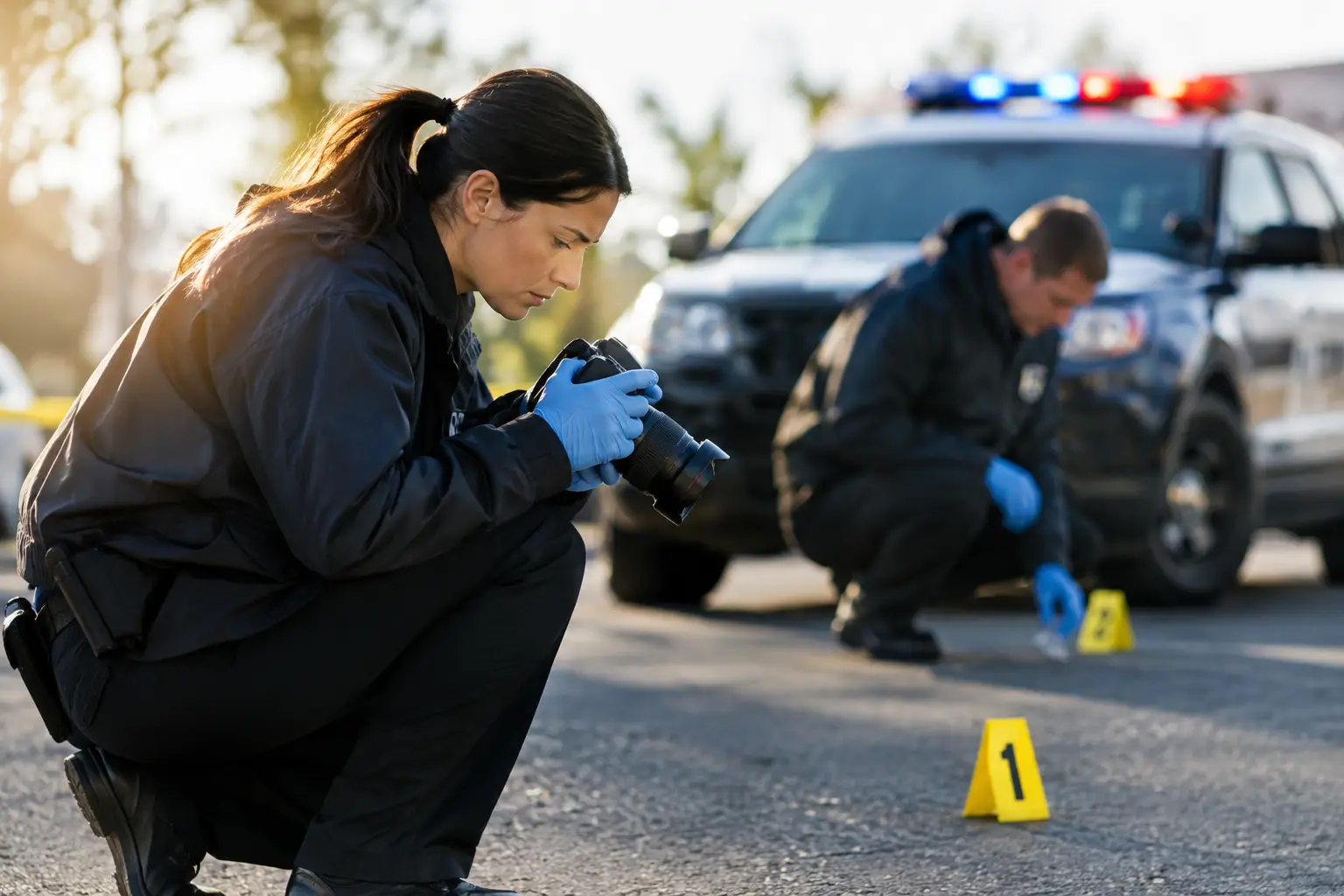
The radio call ends, the patrol cars arrive, and the part most people recognize from television begins: lights, tape, uniforms, questions. But how police investigations work after that first burst of activity is usually slower, more methodical, and more human than fiction suggests. A good case is not built on one dramatic clue. It is built by protecting facts, testing assumptions, and documenting every decision well enough to withstand a defense attorney, a judge, and a jury.
For victims and families, that pace can feel unbearable. For investigators, it is often the difference between an arrest that looks good for a day and a case that can survive in court months or years later.
The First Minutes Set the Direction
The first officer on scene may never become the lead detective, but their work can shape the entire case. Patrol officers deal with immediate threats first: stopping violence, getting medical help, locating suspects, separating witnesses, and making sure nobody else is in danger.
Then comes scene control. That can mean keeping bystanders back, limiting who enters a home or vehicle, recording names and times, and protecting anything that might later matter. A careless footprint, a moved phone, or an unrecorded statement can create problems that no detective can fully repair.
Initial observations matter because they are fresh. An officer notes who was present, what they saw and heard, where people were standing, the condition of doors and windows, whether a weapon is visible, and what each person said without prompting. Early statements are not the final word. People are frightened, injured, intoxicated, grieving, or simply mistaken. But those first accounts give investigators a starting point and sometimes expose changes in a story later.
Not every call becomes a full-scale detective case. Many reports are resolved through patrol follow-up, referrals, or a quick review that shows no crime occurred. Serious violence, suspicious deaths, major property crimes, child crimes, financial schemes, and cases involving repeat offenders are more likely to be assigned to specialized investigators. The structure varies by agency, staffing, and jurisdiction.
How Police Investigations Work at the Scene
A crime scene is not a television set where a single forensic result points to one guilty person. It is a place where investigators ask basic, disciplined questions: What happened? When did it happen? Who had access? What should be here that is missing? What is here that does not belong?
Crime scene personnel photograph before moving items whenever possible. They document the overall location, then narrower details, then individual evidence. They may collect DNA, latent prints, firearms, cartridge cases, clothing, digital devices, documents, tool marks, trace material, or surveillance footage. Each item needs to be labeled, packaged correctly, and tracked through a chain of custody.
That paperwork is not bureaucracy for its own sake. If prosecutors cannot show where an item came from, who handled it, and whether it was protected from alteration, the defense has room to challenge it. Sometimes that challenge is fair. Evidence is only as reliable as the people and processes behind it.
Forensics also has limits. DNA may identify a person who touched an object, but it may not explain when or why. A fingerprint can place someone on a surface, but not necessarily prove a crime. A video clip may be blurry, incomplete, or missing the events immediately before and after the recorded moment. Investigators must resist the temptation to force every result into the first theory that sounds right.
Interviews Are More Than Asking Questions
Witness interviews are a central part of most cases, and they require patience. People do not remember events like video cameras. Stress can sharpen certain details and blur others. Two honest witnesses may disagree about clothing, distance, timing, or who spoke first.
A capable investigator starts broad. Tell me what happened. What did you notice? What happened next? Then the detective works toward specific points without feeding the witness an answer. The goal is to preserve the person’s own account, identify what they truly know, and separate observation from assumption.
Victim interviews may take place more than once. Trauma can affect memory, trust, sleep, and the willingness to talk. A victim who cannot give a clean, chronological account in the first hours is not automatically unreliable. The investigator’s job is to be persistent without becoming careless or cruel.
Suspect interviews are governed by constitutional rules and agency policy. Whether a person is free to leave, in custody, represented by counsel, or invoking the right to remain silent changes what officers can do next. Good investigators understand that a confession is not the finish line. It must be voluntary, corroborated where possible, and obtained lawfully. A statement that violates constitutional protections can damage the entire case.
Building the Case Means Checking the Story
Once the immediate scene work is done, the investigation becomes a process of verification. Detectives compare statements against records, video, physical evidence, timelines, phone data obtained through lawful process, financial activity, prior reports, and the simple practical details of a person’s movements.
A timeline is one of the most valuable tools in an investigation. It can reveal a gap in an alibi, support a witness who was doubted, or show that the original theory cannot be true. Investigators map calls, travel, purchases, camera footage, dispatch logs, medical records, and known events. They keep asking whether the evidence supports the theory or merely fails to disprove it.
This is where cases can go wrong. Pressure from the public, command staff, media coverage, or a grieving community can push people toward premature certainty. The more serious the crime, the greater the need for discipline. An investigator who ignores facts that do not fit is not being tough. They are putting the case at risk.
Digital evidence has added another layer. Phones, social media, doorbell cameras, vehicle systems, and location data can be powerful leads, but access is not automatic. Investigators may need consent, a subpoena, a search warrant, or another lawful basis, depending on the facts and the jurisdiction. Technology creates leads. It does not eliminate the need for judgment.
Warrants, Probable Cause, and Legal Boundaries
Police do not need proof beyond a reasonable doubt to make an arrest. They generally need probable cause – facts and circumstances that would lead a reasonable person to believe a crime occurred and that the suspect committed it. That is a significant threshold, but it is lower than the standard required for conviction.
Search warrants require their own probable cause. An affidavit explains what investigators know, how they know it, and why there is reason to believe evidence will be found in a particular place. A judge reviews the request. If the warrant is approved, officers must execute it within its terms.
The details matter. Searching the wrong place, exceeding the scope of a warrant, or writing a weak affidavit can lead to evidence being challenged or excluded. There are exceptions to the warrant requirement, but they are not a license to cut corners. The Constitution is not an obstacle to good police work. It is the boundary line that gives lawful police work its legitimacy.
The Prosecutor Is Part of the Investigation
In strong cases, detectives and prosecutors communicate early, particularly in major crimes or legally complicated investigations. A prosecutor can identify proof problems, recommend additional investigative steps, help assess a warrant, and explain what will be needed to prove each element of an offense.
That relationship does not mean police decide guilt. It means the case is evaluated through the lens of what can be ethically and legally proven. Prosecutors also have disclosure obligations. Evidence that helps the defense, undermines a witness, or points toward another suspect cannot simply be buried because it complicates the case.
Sometimes the honest outcome is that there is not enough evidence to charge. That can be painful for everyone involved, especially victims who want a clear answer and accountability. It can also change later. New witnesses come forward, lab results return, digital records are located, or another case reveals a pattern. A case may be inactive without being forgotten.
The Human Weight Behind the File
Case files can become stacks of reports, photographs, recordings, and evidence logs. But every file involves people. Victims may be trying to return to work, sleep through the night, or explain to children why life changed. Witnesses may fear retaliation. Officers and detectives carry scenes and statements long after shift change.
Professionalism means taking that weight seriously without letting emotion replace evidence. It means treating victims with respect, giving honest updates when possible, and admitting when an answer is not yet available. It also means recognizing that investigators are not machines. Exposure to violence, loss, and cruelty has a cost, and agencies that ignore it eventually pay for it in burned-out people and damaged judgment.
The best way to understand police work is not as a chase toward a dramatic arrest, but as a disciplined search for facts under pressure. The sirens may be the loudest part. The real work is what happens afterward: patient, lawful, often frustrating effort to find the truth and give it a chance to hold up when it matters.