
Why Signed Military Thriller Books Still Matter

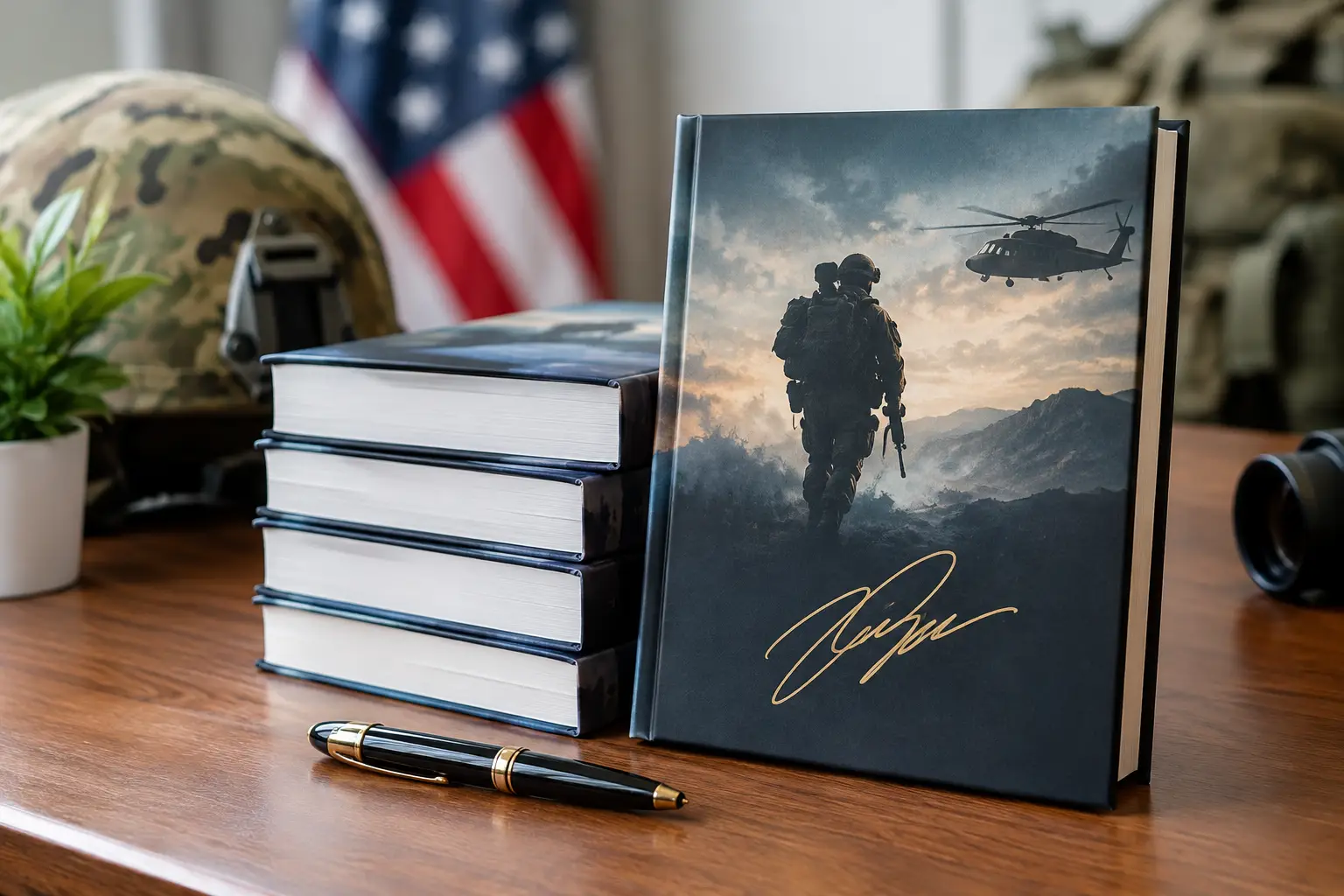
A signature on a military thriller is not just ink on a title page. For many readers, it marks a connection to the person who built the story – and to the hard-earned experience behind the firefight, the investigation, the bad call, or the decision that follows a character home. Signed military thriller books carry that connection in a way a standard copy often cannot.
That does not make an unsigned book lesser. A good story earns its place through the writing. But when a novel is grounded in service, law enforcement, contracting, or recovery, a signed edition can feel like a piece of the larger conversation. It says this book came from a real person who understands that action has consequences, loyalty has a cost, and survival is rarely as clean as it looks on a movie screen.
What Makes Signed Military Thriller Books Different
Military thrillers are built on momentum. A threat is moving. A team is under pressure. Time is running out, and somebody has to make a call with incomplete information. The best books in the genre deliver that pace without treating violence as decoration.
A signed copy adds a human layer to that experience. Readers are not simply collecting an object. They are keeping a book connected to the author who imagined the mission, shaped the characters, and decided which details mattered. That matters most when the author brings firsthand knowledge of the worlds on the page.
There is a difference between knowing the names of weapons and understanding how fatigue changes judgment at 3 a.m. There is a difference between describing a K9 deployment and knowing the relationship of trust required between a handler and a working dog. There is a difference between writing a courtroom scene and recognizing how a case can turn on one report, one witness, or one mistake in the chain of evidence.
Readers can feel those differences. Authenticity is not a collection of tactical terms. It is the weight of a decision, the pace of a briefing, the dark humor used to cut tension, and the silence after the noise stops.
The Value Is Personal, Not Just Collectible
Some readers buy signed editions because they collect first editions, special releases, or complete series. That is a valid reason. A signed book can become a centerpiece on a shelf, especially when it is part of a series a reader has followed from the first mission to the last.
For others, the value is more personal. A veteran may recognize a truth in a character trying to fit back into civilian life. A police officer may appreciate an investigation that does not ignore procedure. A military spouse may see the strain of deployment and homecoming handled without clichés. A civilian reader may simply want stories that respect the people who serve rather than using them as props.
In those cases, the signature becomes a small acknowledgment: this story was made with care. It does not claim that every fictional event happened exactly as written. It does signal that the author understands the terrain – physical, professional, and emotional.
That is particularly meaningful in military fiction because the genre can be crowded with spectacle. Explosions are easy. Competence is harder. So is writing about the aftermath of force without slowing a story to a lecture.
A Good Signature Cannot Save a Weak Story
A signed copy should never be the only reason to buy a book. The story still has to deliver.
The strongest military thrillers put readers beside capable people facing difficult choices. They do not make every operator invincible or every enemy foolish. They understand that plans break, information is incomplete, and the mission may succeed while the people involved carry damage forward.
That is where signed editions can become more than merchandise. When the book itself has depth, the inscription or signature serves as a reminder of the work behind it. It can make a reader pause before passing the book to a friend, placing it on a shelf, or returning to it years later.
There is also a practical trade-off. If your only goal is to read the story quickly and cheaply, a standard edition may be the right choice. Books are meant to be read, marked up, loaned out, and carried in a bag until the cover takes a beating. A signed copy is not automatically more useful.
But if the book means something to you, or if you are building a library around service, history, crime, K9 work, or resilience, choosing a signed edition makes sense. It creates a keepsake without turning the book into something too precious to open.
The Best Signed Books Carry a Story Beyond the Cover
A signature is strongest when there is a real story behind it. That story might be an author’s years in uniform, time in law enforcement, experience handling dogs, work in hostile environments, or the difficult process of rebuilding after trauma. It might also be the reader’s own story.
A signed military thriller can become a retirement gift for a patrol partner, a meaningful present for a deployed service member, or a way to honor a family member who has spent years carrying the unseen weight of service. It can be a conversation starter between generations – a grandfather and granddaughter discussing a novel’s mission, a veteran explaining what fiction gets right, or a young reader learning that courage is not the absence of fear.
The best stories also leave room for disagreement. Veterans and first responders do not all share the same experiences. One reader may find a scene familiar; another may see it differently. That is not a failure of the genre. It is a reminder that no single book can contain every version of service.
What readers deserve is honesty. They deserve characters who are more than weapons platforms and trauma that is more than a plot device. They deserve authors who know that recovery is work – often slow, sometimes frustrating, and never solved by a final chapter alone.
How to Choose a Signed Military Thriller Worth Keeping
Start with the story you want to spend time with. If you want international stakes, look for a series with a capable lead, strong pacing, and missions that feel grounded even when the danger escalates. If you prefer the overlap between military experience and policing, find books that respect both investigative work and the realities of force. If K9 stories matter to you, look for writers who understand that a working dog is neither a mascot nor a magical plot shortcut.
Then consider the author’s relationship to the material. Firsthand experience is not the only path to writing good fiction, but it can bring texture that research alone may miss. Look for an author who handles service, trauma, and loss with restraint. The point is not to avoid hard scenes. The point is to make those scenes earn their place.
A signed edition is also worth considering when you are starting a series. There is satisfaction in owning the first book in a run, especially when the characters grow, make mistakes, and carry consequences from one installment into the next. A signed first book can become the anchor for the shelf.
Jon T. Harris writes from lived experience in law enforcement, military service, security contracting, prosecution, and K9 work. That background does not replace storytelling. It gives the stories a foundation: truth, grit, and an understanding that the people who walk into danger are still human when they walk out.
Read It, Then Put It in Someone Else’s Hands
The purpose of a signed book is not to sit untouched behind glass. It is to be read. Let the pages crease. Let the cover travel. Talk about the scene that felt true, the character who made the wrong call for the right reason, or the moment when the mission ended but the real struggle began.
If a signed military thriller stays with you, pass a second copy to someone who might need it. Keep the signed one as a marker of the story that mattered. Give the other away so the conversation keeps moving.