

War Dog Memoir Review of A Year Behind the Leash

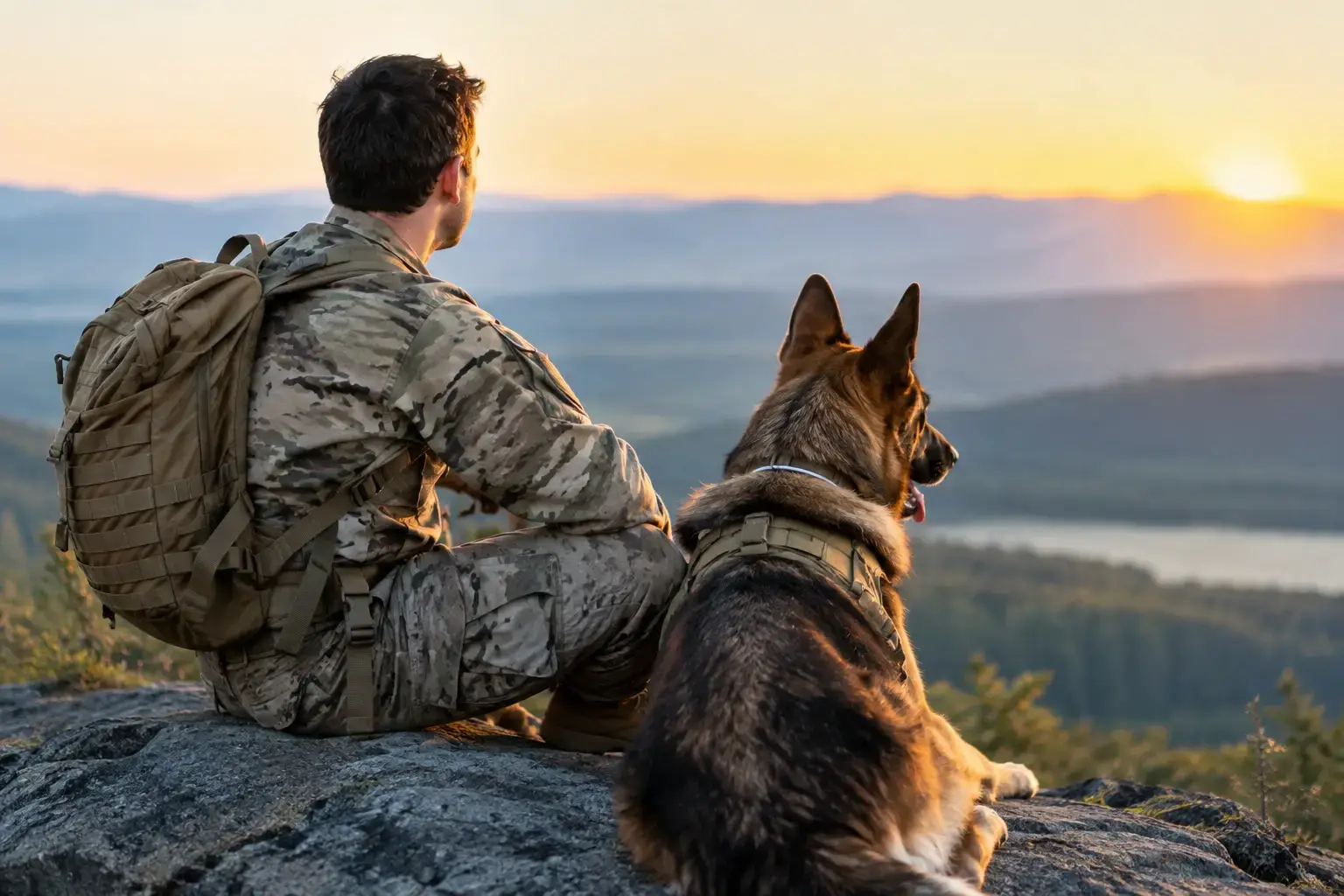
A good war dog memoir review has to judge more than whether the story moves. It has to ask whether the book tells the truth about what service can take from a person, what a working dog can give, and what neither courage nor loyalty can fix overnight. A Year Behind the Leash meets that test because it does not turn trauma into a plot device or a dog into a miracle cure.
This is a memoir about PTSD, identity, injury, and the uneasy work of learning how to live after the mission changes. The war dog at its center matters deeply, but the book understands the difference between companionship and rescue. A dog can bring routine, purpose, alertness, and a reason to get out of bed. That does not mean the past stops speaking.
A War Dog Memoir Review Built on Truth
Many military memoirs know how to handle the moment of impact. They can put the reader in the convoy, the patrol, the firefight, or the medical evacuation. Fewer are willing to stay with the aftermath: the silence in the house, the damaged relationships, the anger that arrives too fast, and the loss of professional identity when the work that defined you is gone.
That is where A Year Behind the Leash earns its weight. Jon T. Harris writes from lived experience in law enforcement, military service, contracting, and K9 work, but the authority of the book is not limited to operational detail. Its real authority comes from its refusal to perform toughness for the reader. The hard moments are not polished into hero scenes. They are allowed to be confusing, embarrassing, painful, and unfinished.
For veterans, first responders, and families who have lived close to trauma, that restraint matters. Real recovery rarely follows a straight line. A person may handle a crisis with calm competence and still struggle with a grocery store, a crowded room, sleep, or a conversation that should be simple. The memoir gives that contradiction room to exist without trying to explain it away.
The Dog Is a Partner, Not a Prop
A lesser book would make the canine relationship sentimental. It would present the dog as a flawless creature who arrives, recognizes brokenness, and repairs it by the final chapter. That version may be comforting, but it is not how working dogs or wounded people operate.
Here, the dog is a partner with needs, instincts, limits, and a job to do. The relationship is built through repetition, responsibility, trust, and attention. That makes it more believable and more moving. The dog does not erase the wounds of war. Instead, the animal creates a structure around which a damaged life can begin to function again.
That distinction will land with handlers and K9 professionals. A good dog demands consistency. The handler has to show up, read behavior, manage energy, keep the animal safe, and remain accountable even on bad days. For someone whose inner life has become chaotic, those duties can become a practical form of discipline. Not a cure. A foothold.
Civilian readers may also come away with a clearer understanding of why service dogs and working dogs mean so much to the people paired with them. The bond is not about a dog being human. It is about a dog offering something humans often cannot: direct feedback, steady presence, and a reason to act with purpose when motivation is thin.
PTSD Is Treated as a Wound, Not a Character Flaw
The most valuable choice in this memoir is its treatment of PTSD. The book does not romanticize suffering, and it does not frame trauma as a private weakness to be beaten through sheer force of will. It shows that endurance matters, but endurance alone is not the whole answer.
Readers with military or public-safety backgrounds will recognize the pressure to keep moving. In those professions, competence is survival. You learn to control your expression, solve the next problem, protect the people around you, and avoid becoming the problem yourself. Those habits can save lives on the job. They can also make it harder to admit that something inside has changed.
A Year Behind the Leash respects that tension. It does not lecture the reader about healing. It acknowledges that accepting help can feel like surrender when a career has trained you to handle pain quietly. The book argues, through experience rather than slogans, that facing the wound is another form of service. It protects families, partners, teammates, and the person carrying it.
That perspective makes this more than a combat-adjacent animal story. It is a book about reinvention after the role you knew best has been stripped away. The question is no longer, “Can I do the job?” It becomes, “Who am I when I cannot live the way I used to?” That is a hard question, and the memoir does not offer a cheap answer.
What Readers May Find Difficult
This is not a light read dressed up with a dog on the cover. Readers looking for nonstop battlefield action, a tidy redemption arc, or uncomplicated inspiration may find the emotional terrain demanding. The story asks the reader to sit with frustration, vulnerability, and the fact that recovery can be measured in small gains rather than dramatic victories.
That is also its strength. The memoir understands that progress can look ordinary from the outside: getting through a night, honoring a commitment, taking care of a dog, telling the truth when it would be easier to retreat. Those acts may not look cinematic, but they are often where a life is rebuilt.
Some readers may wish for more distance from the pain. Others will recognize that distance as the exact thing the book refuses to manufacture. Whether that feels heavy or healing depends on the reader’s experience. For someone currently in the middle of acute trauma, it may be wise to read slowly and with support nearby. For a spouse, caregiver, friend, or colleague, the memoir can provide a useful window into burdens that are often hidden behind silence or irritability.
Who This Memoir Is For
This book will speak most directly to veterans, law-enforcement officers, first responders, contractors, K9 handlers, and military families. It will also connect with anyone who has had to rebuild after injury, loss, burnout, or a career-ending change. The details may be rooted in service, but the larger struggle is universal: how to remain useful, connected, and honest after life no longer resembles the plan.
Readers who value military nonfiction with operational credibility will appreciate that the stakes feel earned. Readers drawn to dog stories will find a bond grounded in work rather than sentiment. And readers trying to understand PTSD will find a candid account that avoids both pity and posturing.
The best reason to read A Year Behind the Leash is not to admire pain from a safe distance. It is to better understand the daily labor of carrying it, naming it, and choosing one more responsible step forward. Sometimes that step begins with a leash in your hand and a living creature depending on you to keep moving.