

Trust at the End of a Leash

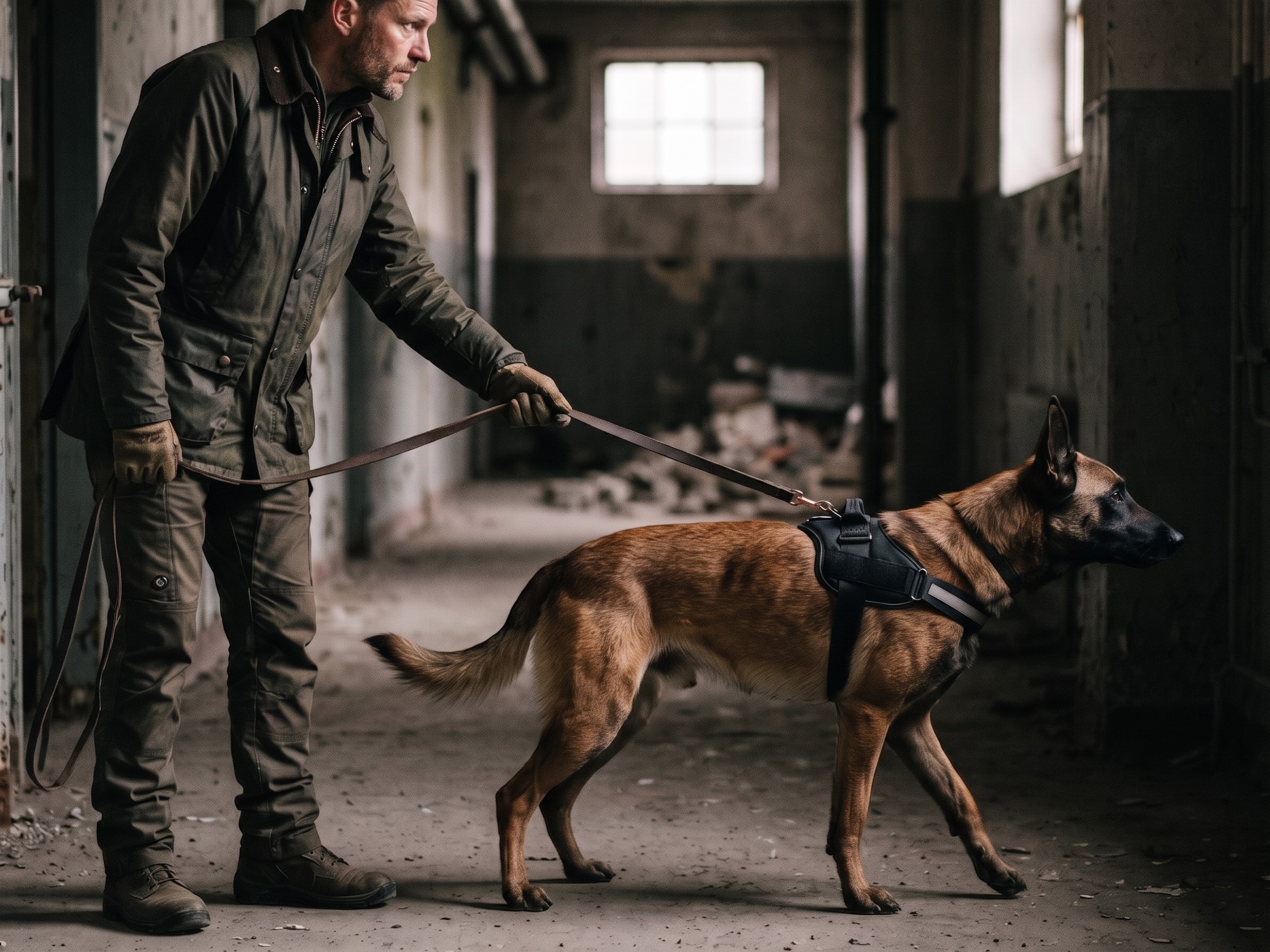
Trust doesn’t announce itself. It builds quietly, step by step, at the end of a leash you hold every day. With a working dog, trust isn’t abstract. It’s practical. It’s immediate. It’s life and death. You don’t get to ease into it. From the first patrol, the first search, the first dark hallway or dusty road, you are betting your safety on a creature who can’t explain what they’re sensing only that something isn’t right. And you listen.
Learning to Read What Can’t Be Said:
A working dog doesn’t speak your language. Instead, you learn theirs. A change in breathing. A stiffened tail. A pause that lasts half a second longer than it should. Trust starts there, not with commands, but with attention. You stop assuming you’re the smartest one in the room. You let instinct guide you when logic doesn’t have enough information yet. That humility keeps people alive.
When the Dog Knows First:
There are moments when the dog knows before anyone else does. Before the radio crackles. Before the gut feeling kicks in. The dog plants. Refuses to move. Signals danger where the path looks clear. That’s when trust gets tested.
Do you override the dog because the route is faster? Because command wants progress? Or do you respect the warning that doesn’t come with proof only experience? At the end of a leash, hesitation can save your life.
Earning Trust Both Ways:
Trust isn’t one-sided. The dog is watching you too. Do you protect them? Do you read their stress? Do you push when it’s unsafe or pull back when it’s time? A dog that trusts its handler works differently. Freer. Sharper. More confident. That trust is earned in how you handle mistakes, fatigue and fear, not just success. Leadership to a dog, is consistency under pressure.
The Weight of Responsibility:
Holding a leash means more than directing movement. It means taking responsibility for another life that depends entirely on your judgment. You decide when to deploy. When to rest.
When to risk it and when not to. That weight never leaves your hand. It tightens during danger and stays long after the mission ends. Trust isn’t light. It’s heavy because it matters.
Silence Between Handler and Dog:
Some of the strongest moments happen without words. A hand on a harness before moving forward. A pause to let the dog work. A quiet acknowledgment when the job is done. In those moments, trust feels complete not because everything is safe, but because you know you’re not alone in the risk.
When Trust Is Broken by Circumstance:
Not all endings are clean. Injuries happen. Explosions rattle nerves. Dogs carry trauma too. When trust fractures, when a once-solid bond changes, it hurts in ways that are hard to explain. You grieve not just the loss of safety, but the loss of certainty. Even then, the bond remains. Complicated. Heavy. Real.
Lessons That Stay Long After the Leash Is Gone:
Long after the work ends, the lessons remain. Listen before acting. Respect instincts, yours and others’. Trust is built through consistency, not control. The leash may be gone, but the way you learned to trust never leaves you.
More Than a Working Relationship:
Trust at the end of a leash isn’t about obedience. It’s about partnership. Two beings moving forward together, each carrying part of the risk, each relying on the other to do their job without hesitation. That kind of trust changes you. And once you’ve held it in your hand, felt its weight, its responsibility and its quiet power, you never forget what it means to truly trust someone with your life.