

7 Best Books About Military Prosecutors to Read

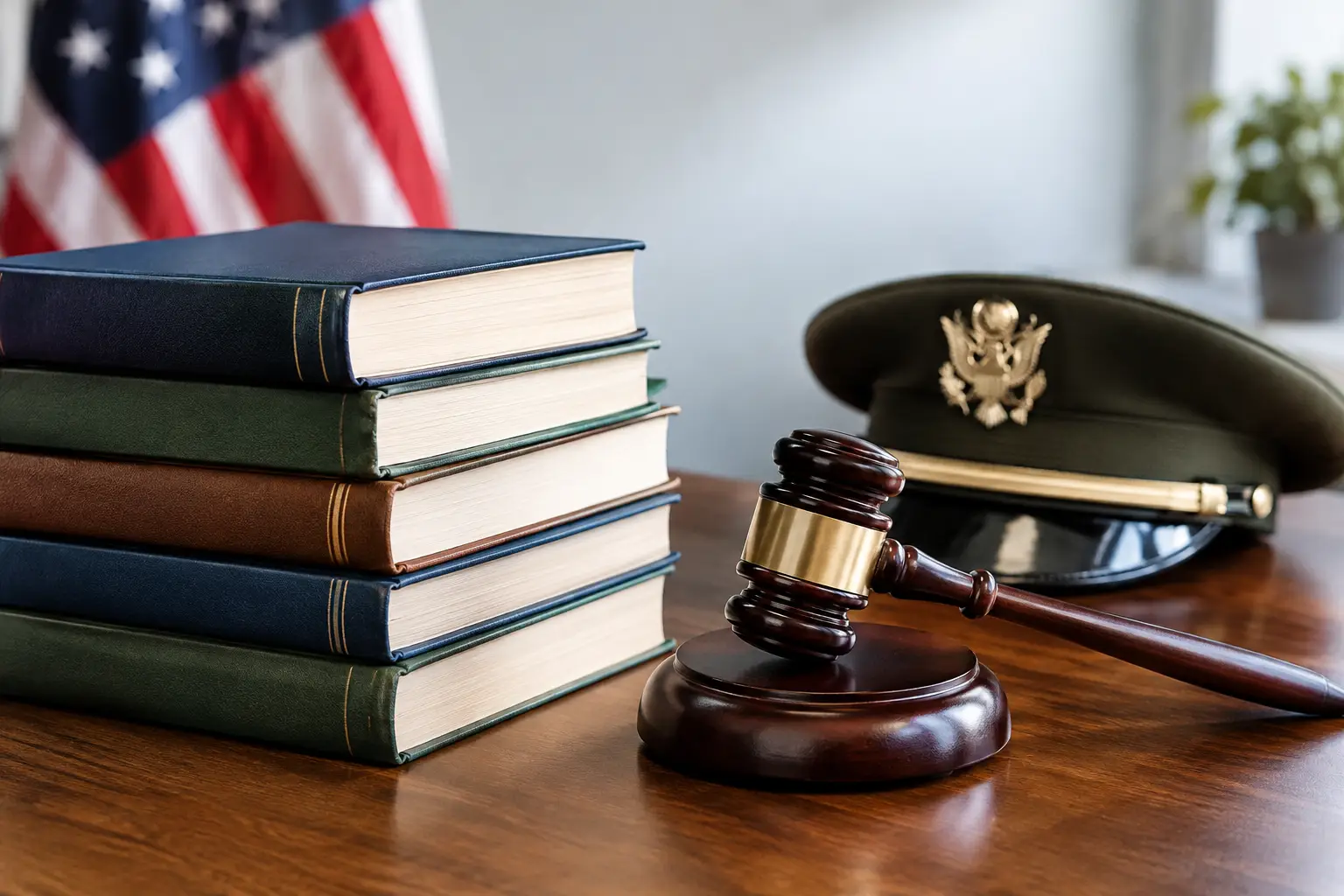
A military prosecutor does not walk into court carrying only a case file. He or she carries the weight of rank, command pressure, public trust, and the knowledge that a conviction can end a career or change a family forever. The best books about military prosecutors understand that military justice is not civilian court in uniform. It is a system built to preserve discipline while still demanding fairness, often under conditions where neither comes easy.
For readers who value credible procedure, hard choices, and characters who have to live with the consequences of a verdict, these books offer more than courtroom speeches. They show the friction between duty and conscience, the chain of command and the rule of law, loyalty to a unit and loyalty to the truth.
7 Best Books About Military Prosecutors
1. A Few Good Men by Aaron Sorkin
No list of military courtroom fiction is complete without A Few Good Men. The central lawyer is a defense counsel, not a prosecutor, and that distinction matters. But the story earns its place because it captures the force that every military prosecutor must contend with: command influence, institutional loyalty, and the temptation to protect a mission or reputation at the expense of the facts.
The legal fight begins with the death of a young Marine after a hazing incident known as a “Code Red.” What follows is a battle over who gave the order, who carried it out, and whether those at the bottom should bear the full blame. Sorkin writes with theatrical force, so readers looking for a quiet, document-heavy procedural may find it heightened. Still, its central question hits hard: when obedience becomes criminal, where does responsibility really stop?
2. Treason by Don Brown
Don Brown’s JAG novels belong near the top for readers who want legal suspense built around the modern military. Treason puts Navy Judge Advocate General Corps officers into a case where national security, military duty, and criminal accountability collide. Brown understands that a military legal case can begin far from a courtroom – on a ship, in an operations center, or in a classified briefing room.
This is commercial thriller writing, so the pace moves faster than an actual court-martial docket. That is part of the appeal. The book gives readers the machinery of military justice without parking the story in legal research for chapters at a time. For fans of action fiction, it is a strong bridge between operational stakes and courtroom consequences.
3. The Caine Mutiny by Herman Wouk
The Caine Mutiny is not a prosecutor-centered novel, but it may be one of the sharpest books ever written about the moral terrain surrounding a court-martial. A naval officer relieves his captain during a typhoon, then faces trial for mutiny. The legal proceeding forces everyone involved to confront an ugly possibility: a technically successful defense can still leave deeper truths untouched.
Wouk’s real strength is his refusal to hand the reader an easy villain. Captain Queeg is unstable and often petty. The officers who move against him may be justified, but they are not automatically noble. A prosecutor reading this kind of case would have to separate irritation, fear, professional resentment, and actual criminal conduct. That is the work. Facts do not arrive clean just because the uniforms are pressed.
4. Paths of Glory by Humphrey Cobb
Few novels show the brutality of command decisions and military prosecution more clearly than Paths of Glory. Set during World War I, it follows French soldiers selected for court-martial after refusing an impossible assault. Their alleged cowardice is not the real issue. The men are being used to cover the failures of senior leaders who sent them into a slaughter they knew could not succeed.
This is a grim book, and it should be. Cobb exposes what happens when a justice system becomes another weapon of command instead of a check on command power. The prosecutor’s role here is not admirable, but that is exactly why the novel remains valuable. It asks readers to look directly at a professional danger: the law can be manipulated when the outcome is decided before the evidence is heard.
5. The Court-Martial of Billy Mitchell by Douglas C. Waller
Douglas C. Waller’s nonfiction account of Billy Mitchell’s 1925 court-martial is essential reading for anyone interested in how military prosecution intersects with politics, innovation, and institutional survival. Mitchell, a decorated airpower advocate, was tried after publicly criticizing Army and Navy leadership following fatal aviation accidents.
The trial was never just about Mitchell’s words. It was about whether a serving officer could publicly challenge senior leadership, whether his warnings had merit, and how much dissent a military organization could tolerate. Waller handles the personalities and political stakes with the urgency of a novel, but the history keeps the reader grounded. Prosecutors, defense counsel, and commanders all operate under a spotlight in this case. Nobody gets the luxury of pretending that high-profile military justice is free from outside pressure.
6. Justice at Nuremberg by Robert E. Conot
Military prosecutors do not always pursue crimes committed by service members against their own institution. Sometimes the work is larger and darker: building cases against leaders responsible for industrial-scale atrocities. Robert E. Conot’s Justice at Nuremberg is a deeply researched account of the postwar trials that sought to establish accountability after the Holocaust and World War II.
It is not a light read, nor should it be treated as one. The book reveals the enormous challenge of trying senior officials for crimes that had no comfortable precedent. Prosecutors had to build a record from captured documents, witness testimony, military reports, and the wreckage of a continent. Readers interested in the ethics of prosecution will find the trade-offs here especially compelling. Justice had to be seen as legitimate, but it also had to be delivered before memory faded, evidence disappeared, and politics shifted.
7. The Deserter by Nelson DeMille and Alex DeMille
The Deserter is primarily an investigative thriller rather than a courtroom novel, but it earns a place for readers who want to understand what comes before any military prosecution can begin. A U.S. Army CID investigator tracks a former Delta Force officer accused of a horrific crime in Venezuela. The deeper he goes, the less clean the case becomes.
That is familiar ground for anyone who has worked serious investigations. Prosecutors do not simply inherit a neat package labeled truth. They inherit witnesses with motives, evidence gathered under difficult conditions, command concerns, jurisdiction fights, and facts that may not point where the first report suggested. DeMille’s style is punchy and often irreverent, which will work for some readers better than others. Beneath the wisecracks, though, the book understands that an investigation can become morally complicated long before a charging decision is made.
What Makes a Military Justice Story Worth Your Time?
The strongest military legal books do not confuse rank with character or a conviction with justice. They understand that commanders need discipline, victims deserve honest advocacy, and the accused are entitled to a process that is more than a formality. When one of those truths is ignored, the entire system starts to fail.
Readers with military, law-enforcement, or legal experience will spot shortcuts in weak courtroom fiction fast. A real prosecutor has to assess evidence, disclose problems, test witness credibility, prepare for defense attacks, and make decisions that hold up after the courtroom clears. The job is not winning at any cost. It is pursuing the right outcome with the facts available, even when that outcome frustrates a commander, a victim, or the prosecutor’s own instincts.
That is why the best stories in this category are rarely simple good-versus-evil tales. They leave room for fear, pride, flawed leadership, damaged people, and the lasting cost of service. For a reader drawn to stories forged from real pressure, start with the case that hits closest to home, then pay attention to the people left standing after the verdict. That is where military justice becomes human.