

Combat Zone Novels That Respect the Cost of War

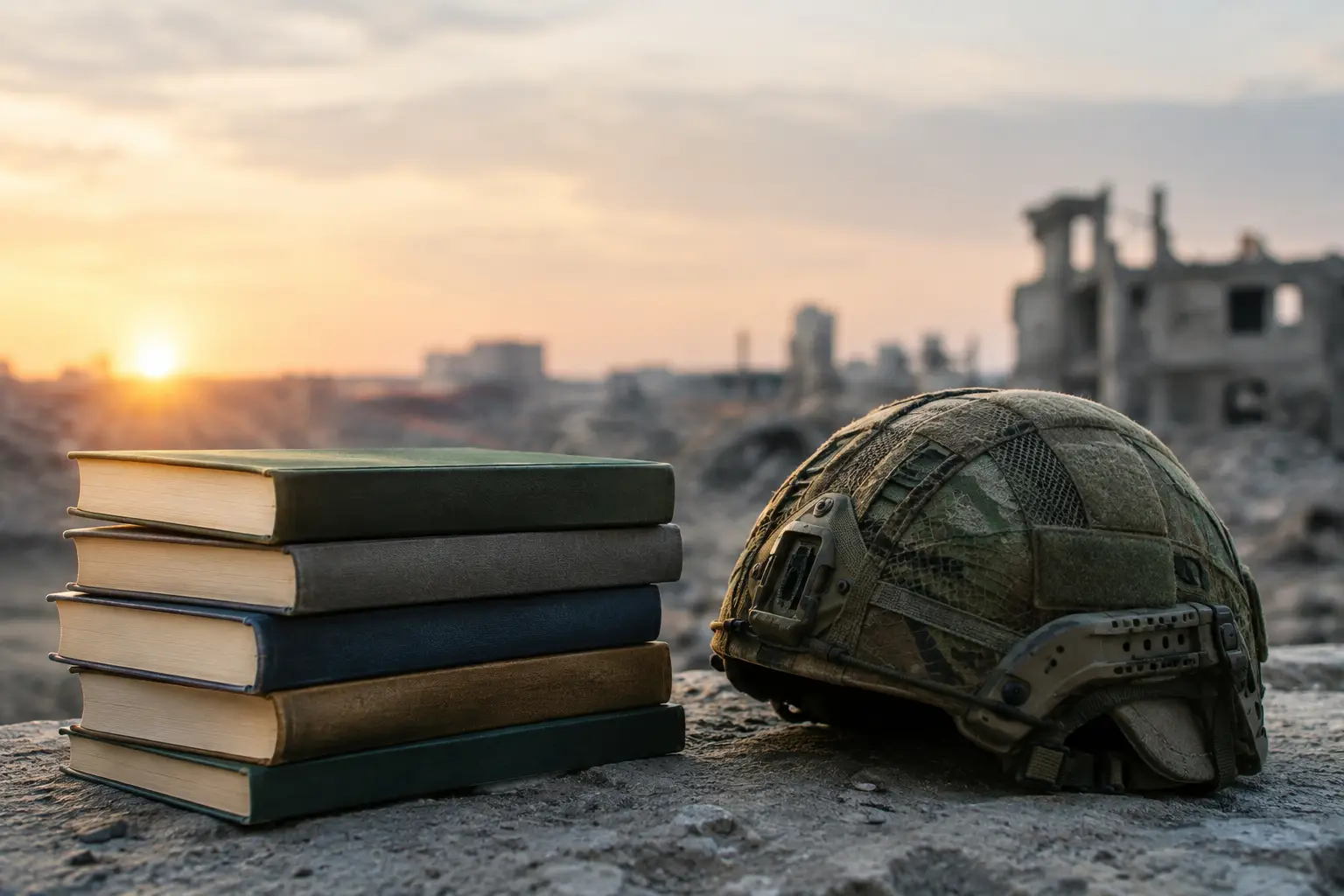
A firefight can last three minutes on the page. What comes after it can shape a character for the rest of the book. That is the dividing line between combat zone novels that merely use war as scenery and stories that understand what service, violence, loyalty, and loss can do to a human being.
Readers who know the military, law enforcement, contracting, or emergency service work can spot false notes early. The radio traffic sounds too clean. A wounded teammate is treated like a plot device. The hero moves from devastation to a wisecrack without carrying any weight from the moment. But realism is not just an inventory of weapons, acronyms, and tactical gear. It is knowing that every decision made under pressure has a price, even when it is the right decision.
What Combat Zone Novels Owe the Reader
A credible war story does not need to lecture. It needs to respect the people who live inside its pages. Combat is fast, confusing, and often painfully practical. People are worried about the next intersection, the radio that has gone quiet, the teammate who is not answering, the vehicle that will not start, or the civilian caught in the wrong place at the worst possible time.
That practical focus gives a novel its pulse. Characters do not act bravely because the author calls them brave. They act because somebody has to take the next position, check the casualty, call for support, or make a decision with incomplete information. Courage is often less dramatic than it looks from a distance. It is movement despite fear, fatigue, anger, and uncertainty.
The strongest combat zone novels also recognize that competence has limits. Training matters. Experience matters. Good teams matter. None of those things make war predictable. A skilled operator can make sound choices and still lose someone. An officer can follow procedure and still have to explain a terrible outcome to a family. That tension is where stakes become more than explosions.
Action Needs a Human Point of View
Readers come to military thrillers for momentum, and they should get it. A raid, convoy ambush, extraction, or pursuit needs clarity and speed. The reader should understand where the danger is, what the objective requires, and what failure will cost.
Still, clean action is not sterile action. The best scenes carry a human point of view through the chaos. A character might notice the weight of a spare magazine, the tremor in a young teammate’s voice, or the sudden silence after the shooting ends. Those details do more than decorate a scene. They tell the reader that someone is paying attention because survival demands it.
This is also where restraint matters. Not every engagement needs to become a larger-than-life set piece. A short encounter at a checkpoint can hold more tension than a hundred rounds fired without consequence. It depends on what is at risk, who is responsible, and what the character will have to live with afterward.
The Difference Between Authenticity and Spectacle
Authenticity is often misunderstood as technical accuracy alone. Technical accuracy matters, especially to readers who have worn the uniform, carried the badge, handled a working dog, or worked security in unstable places. Getting basic procedures wrong can break trust in a sentence.
But equipment knowledge without emotional truth is just catalog copy. A writer can name every rifle component and still miss the experience of waiting for a friend to come back from a mission. They can describe a blast in detail and never show the strange, hollow quiet that can follow it. They can write a decorated protagonist who never doubts, grieves, or changes, but that character will feel less real than the gear.
Spectacle has a role. Readers want danger, tactical problem-solving, and hard-edged suspense. The trade-off comes when violence is treated as entertainment with no moral or physical residue. If a character takes a life, orders someone into danger, or fails to save a teammate, the story should not rush past it just to reach the next chapter.
That does not mean every military novel must be grim or slow. Humor, banter, and gallows jokes belong in real teams. So does friendship. So does the stubborn ability to laugh at something ridiculous in the middle of a miserable day. The difference is context. Humor becomes more believable when it is a survival tool, not a way for the book to avoid feeling anything.
The Mission Does Not End at Home
For many people, the most difficult part of service begins after deployment, injury, retirement, or separation from a team. The body may be home while the mind remains alert for threats that are no longer there. Relationships can become strained. Sleep becomes a fight. Work that once gave a person purpose may be gone.
This is where combat fiction can either become sentimental or become honest. Trauma is not a shortcut to make a protagonist look damaged and interesting. It is not a single nightmare followed by a breakthrough speech. It can be anger, numbness, hypervigilance, isolation, shame, grief, physical pain, and the exhausting work of trying to reconnect with ordinary life.
Recovery deserves the same respect as combat. It is active work. It may involve treatment, family, faith, service, a dog, a trusted friend, or the difficult decision to admit that the old way of coping is no longer working. There is no universal path, and a novel should not pretend there is. But a character who chooses to keep showing up, even badly at first, gives readers something more valuable than a tidy ending.
Why Moral Complexity Makes the Story Stronger
War stories lose force when every choice is easy. A villain who is evil in every possible way may create a simple target, but he does not test the protagonist’s values. Harder questions create stronger fiction: What happens when the mission is legal but feels wrong? What does a commander owe the team when the objective changes? When does loyalty become silence about a mistake that must be confronted?
These questions do not require a novel to abandon clear ideas of right and wrong. They require it to acknowledge that good people can be trapped in bad circumstances. Readers who have worked in high-stakes professions understand this. Policy, politics, intelligence failures, personal history, fear, and exhaustion can all press against a decision in the same instant.
The most memorable protagonists are not flawless killing machines. They are capable people with lines they will not cross, even when crossing them would be easier. When they do fail, they face the failure. When they survive, they do not confuse survival with being untouched.
What Readers Should Look For
When choosing combat zone novels, look beyond the body count and the cover copy. A story worth your time usually gives its characters professional competence without turning them into superheroes. It understands that teams are built on trust, friction, shared standards, and the hard-earned knowledge that someone beside you will do their job.
Look for consequences that carry forward. An injury should change movement, confidence, and relationships. A lost teammate should leave an empty space in the unit. A difficult decision should follow the character into the next mission, the next conversation, or the next quiet room.
And look for writers who understand that service is not a costume. Stories forged from real experiences do not need to announce their credibility on every page. The truth shows up in the details, in the restraint, and in the respect given to people who carry the mission long after the shooting stops.
The next time a novel puts you in the dust, the dark, or the back seat of a vehicle heading toward trouble, ask one question: does this story know what its characters will carry home? If it does, stay with it. The action may pull you forward, but the human truth is what will stay with you.